|
Let’s begin… ͏ ͏ ͏ ͏ ͏ ͏ ͏ ͏ ͏ ͏ ͏ ͏ ͏ ͏ ͏ ͏ ͏ ͏ ͏ ͏ ͏ ͏ ͏ ͏ ͏ ͏ ͏ ͏ ͏ ͏ ͏ ͏ ͏ ͏ ͏ ͏ ͏ ͏ ͏ ͏ ͏ ͏ ͏ ͏ ͏ ͏ ͏ ͏ ͏ ͏ ͏ ͏ ͏ ͏ ͏ ͏ ͏ ͏ ͏ ͏ ͏ ͏ ͏ ͏ ͏ ͏ ͏ ͏ ͏ ͏ ͏ ͏ ͏ ͏ ͏ ͏ ͏ ͏ ͏ ͏ ͏ ͏ ͏ ͏ ͏ ͏ ͏ ͏ ͏ ͏ ͏ ͏ ͏ ͏ ͏ ͏ ͏ ͏ ͏ ͏ ͏ ͏ ͏ ͏ ͏ ͏ ͏ ͏ ͏ ͏ ͏ ͏ ͏ ͏ ͏ ͏ ͏ ͏ ͏ ͏ ͏ ͏ ͏ ͏ ͏ ͏ ͏ ͏ ͏ ͏ ͏ ͏ ͏ ͏ ͏ ͏ ͏ ͏ ͏ ͏ ͏ ͏ ͏ ͏ ͏ ͏ ͏ ͏ ͏ ͏ ͏ ͏ ͏ ͏ ͏ ͏ ͏ ͏ ͏ ͏ ͏ ͏ ͏ ͏ ͏ ͏ ͏ ͏ ͏ ͏ ͏ ͏ ͏ ͏ ͏ ͏ ͏ ͏ ͏ ͏ ͏ ͏ ͏ ͏ ͏ ͏ ͏ ͏ ͏ ͏ ͏ ͏ ͏ ͏ ͏ ͏ ͏ ͏ ͏ ͏ ͏ ͏ ͏ ͏ ͏ ͏ ͏ ͏ ͏ ͏ ͏ ͏ ͏ ͏ ͏ ͏ ͏ ͏ ͏ ͏ ͏ ͏ ͏ ͏ ͏ ͏ ͏ ͏ ͏ ͏ ͏ ͏ ͏ ͏ ͏ ͏ ͏ ͏ ͏ ͏ ͏ ͏ ͏ ͏ ͏ ͏ ͏ ͏ ͏ ͏ ͏ ͏ ͏ ͏ ͏
|
NEWSLETTER #2 |FEBRUARY 2026 Welcome / introductionIn the February 26 edition, we bring further news about how LLEN is taking shape beginning with a focus on LLEN’s Centre for Language and Literacy in Education Research and Policy. We also bring you some of the interesting developments in language and literacy education from around the nation and forthcoming professional learning relevant to Australian educators. Finally, we put a spotlight on some new publications that are likely to be of interest to LLEN members. Thank you for being part of the LLEN community. Welcome to the LLEN community. Bronwyn Parkin and Damon Thomas
|
Introducing members of the LLEN team
|
|
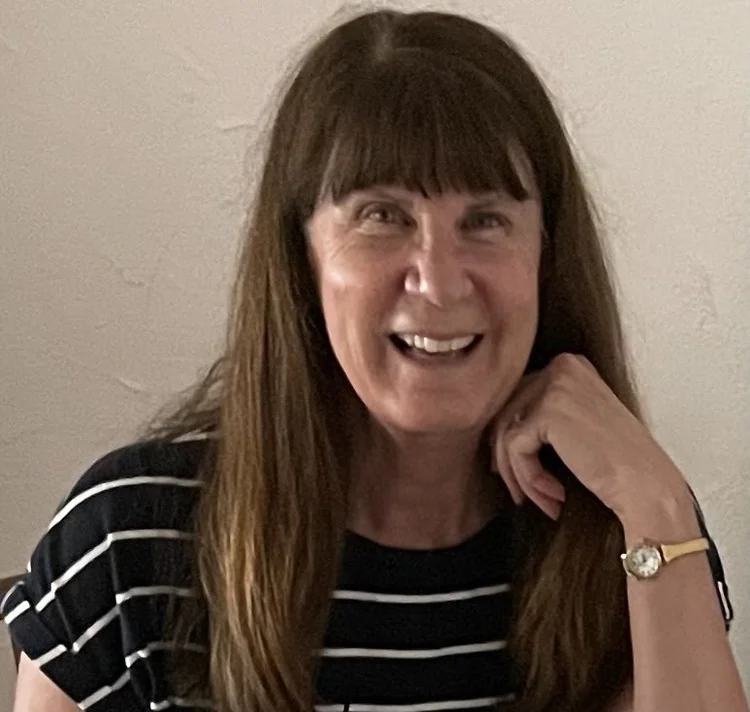
Many educators in the SFL community are giving their time to support the important initiative of LLEN. Each edition of the newsletter will put a spotlight on one of our many contributors, continuing this month with Nathan Lowien from the University of New England. Nathan is a member of LLEN’s Centre for Language and Literacy in Education Research and Policy (CLLERP). Dr Nathan Lowien is a Senior Lecturer in English, Language and Literacies Education in the Faculty of Humanities, Arts, Social Sciences and Education at the University of New England. Nathan’s research is focused on the English curriculum and pedagogy. He investigates the interrelationship between language, literature and literacy in multimodal texts such as videogames, animated films and picture books. Nathan uses systemic functional linguistic and semiotic theory and multimodal critical discourse analysis research methodologies. His research contributes to multimodal theory and the applied research field of English pedagogy. Why is LLEN important, why are you involved and in what capacity?The Language and Literacy English Network is vital as language is more than just a strand of the Australian Curriculum English. Language permeates all educational curriculum areas. The study of language reveals how the vocabulary, clauses, images and meanings of each curriculum area can be arranged to realise patterns of communication that are unique to the curriculum area. Understanding the differences in these language patterns enables educators to teach students how to communicate and interact using the curriculum area’s language patterns and images to demonstrate their learning. What’s your greatest concern about language and literacy education right now?The different curriculum and syllabus documents across Australia describe a fragmented model of language and how people use language to express and negotiate meaning within social contexts. Modern Australian social contexts are comprised of culturally and linguistically diverse communities, and Australian curriculum and syllabus documents face the challenge of describing learning content for the range of student abilities within these communities. Having a consistent model of language and image, and how language and images are used in diverse social contexts to communicate and negotiate meaning, makes pragmatic sense. The depth of the Australian curriculum and syllabus documents would be further enhanced by a consistent model of language and image in social contexts, as described by the systemic functional model of language in social context. Using this model would enable curriculum and syllabus documents to systematically and cumulatively describe student learning content, which accounts for variation in language and image patterns across different curriculum areas.
|
|
The work of LLEN is divided into several committees, each taking on a more specific role in supporting the promotion of language and literacy in education. In each newsletter, we will introduce and include news from the committees. In this newsletter, we introduce CLLERP. The Centre for Language and Literacy in Education Research and PolicyThe Centre for Language and Literacy in Education Research and Policy (CLLERP) is convened by Dr Helen Harper, Associate Professor in Education, University of New England. The committee has an exciting list of academics involved in their work, including:
|
|
CLLERP is a response to the need for a forum for fostering and sharing research projects, and the need to make our research accessible to and valued by policy makers. It aims to nurture, develop and promote a systemic functional semiotics (SFS) community of researchers in language and literacy education and foster an SFS research and publication agenda to consolidate, advance and disseminate our ongoing educational linguistic/semiotic initiatives. An important CLLERP initiative is the analysis of national and state resources and policy documents to map and evaluate their sequence of linguistic development and complexity. Findings will be fed back to the relevant authorities. One working party met after the ASFLA conference to analyse the South Australian syllabus. (Details below.)
|
News from around Australia
|
|
This section is for you! If you have news relevant to the LLEN community, either personal achievements or publications, or news from your jurisdiction for us to consider, please email to bronwyn.parkin@outlook.com.au or damon.thomas@uq.edu.au. 2025 ASFLA conference – SFL in Dialogue for a Dynamic FutureThe successful and energetic 2025 ASFLA conference – SFL in Dialogue for a Dynamic Future, was held at the University of South Australia, City West campus, in Adelaide, South Australia, from 3-5 December 2025. The first day was Teachers’ Day, and it was great to see so many local educators attending and presenting. LLEN took the spotlight in a keynote by Beverley Derewianka and Pauline Jones. The education presentations focused on dialogic pedagogies, language assessment, the language of History and Social studies, film media, text analysis and language for equity. Some of the books introduced in this newsletter were launched at the conference.
|
|
|
Enthusiastic educators buying new SFL publications at the ASFLA conference in Adelaide |
|
Investigating language content in English curriculaSeveral LLEN members met up after the recent ASFLA conference to investigate language-related content across the various curriculum documents used in Australia. The purpose is to identify consistencies and inconsistencies in content and its sequencing and in the metalanguage used as well as the advice to teachers. While the initial focus in on subject English in the primary years, the project is ongoing and will expand to secondary years and to other curriculum areas. It is anticipated that the work will form the basis of a report to government and other educational authorities as well as inform further professional learning and materials development.
|
|
|
The hard-working team: Helen Harper, Ruth French, Bev Derewianka, Bronwyn Parkin, Thea Knott, Brian Dare (out of shot Pauline Jones) |
|
News from LLEN around the world
|
|
There has been a lot of activity around the globe involving SFL educators from many countries collaborating in their regions and taking steps to set up and launch their own Language and Literacy in Education Networks. We're reluctant to name individuals who have been taking the lead in initiating meetings in their regions at this stage as in many cases formal structures with leadership responsibilities have not necessarily been established. However, I'm delighted to report that key SFL educators have started the ball rolling by convening meetings in multiple regions around the globe. A European and Middle Eastern LLEN has been formed. The group has had several meetings with increasing numbers of educators participating each time. They are already well organised and are currently working on membership and leadership roles for their subcommittees. LLEN North America, has also formed using their own distinctive acronym LLENA. Their meetings have been well attended and they are working on establishing their priority areas for action. They have also reached out to their colleagues in South America as they are keen to establish links throughout the Americas from the outset and promote international collaboration. South America: A LLEN has been established in South America with participants from both Spanish and Portuguese speaking countries. Their aim is to create a network within the framework of the Latin American SFL Association, ALSFAL. Their meetings have been very well attended and their network will be called Red de Lenguajes y Literacidades de América Latina(ReLLAL). South East Asia: Initial discussions have also taken place amongst leading South East Asian SFL educators who are keen to launch a LLEN ASEAN early this year. The Nordic Association for SFL and Social Semiotics is currently informing its members about LLEN with a view to establishing a group of educational linguists who might take the lead in initiating a LLEN in the Nordic region via their association. The next step in the process of supporting educators in LLEN Global will be to organise an online meeting for representatives of all the groups to meet and share their experiences of setting up their networks, their ideas and future plans. More details of the progress being made by each LLEN will follow in future newsletters. Convenors Claire Acevedo and David Rose
|
Forthcoming professional development and conferences relevant to Australian members
|
Master sentence construction with Beverly DerewiankaIs your school looking to bridge the gap between grammar knowledge and powerful writing? Join PETAA for an essential professional learning course: Grammar: Sentence Types and Structures – Connecting Ideas. Led by Professor Beverly Derewianka and based on her bestselling A New Grammar Companion for Teachers (3rd Edition), this course moves beyond "naming parts" to show you how to teach students to construct cohesive, coherent, and sophisticated texts. From mastering complex sentence structures to the nuances of reported speech, you’ll gain the tools to enhance clarity at the sentence, paragraph, and whole-text level. Who should participate? F–6 Teachers looking for practical classroom strategies. Literacy Leaders & Heads of Curriculum aiming for school-wide consistency. School Leadership (APs/DPs) overseeing instructional excellence.
You can find out more and register for this online professional learning here. Grammar and teaching with Kathy Rushton and Joanne RossbridgeMany teachers have recognised the need to learn more about the grammatical features of texts. Familiarity with grammar is essential when using language for a range of purposes and audiences, as this knowledge supports appropriate choices. Grammatical knowledge supports students to develop reading and writing in all curriculum areas. Dates: 12X 2 hour sessions by Zoom from February to June, 2026 Presenters: Dr Kathy Rushton is interested in supporting students from culturally and linguistically diverse communities to develop agency in the use of translanguaging. As an experience primary and secondary EAL/D teacher, she is also interested ion the impact of teacher professional learning on the development of language and literacy, especially for students form socio-economically disadvantaged communities. Joanne Rossbridge works as a consultant in primary and secondary schools, especially with EAL/D students. She has worked as a classroom and EAL/D teacher and literacy consultant. Joanne is particularly interested in student and teacher talk, and how talk about language can assist the development of language and literacy skills. For more information and registrations, click here.
|
|
Written by LLEN members Bronwyn Parkin and Helen Harper, Teaching with Intent 3 is the latest in the bestselling and award-winning Teaching with Intent series, and introduces the key grammar and language resources used by the authors of children’s literature to create engaging and stimulating stories.
|
|
|
|
|
|
|
This book has been written to provide teachers with tools for talking about the language of the rich literary texts, or mentor texts, that you work with in your primary English classrooms. The authors use quality Australian children’s literature examples to demonstrate why and how authors use language to impact on their readers: how authors structure narratives to keep us engaged, and how they use literary techniques and grammar to create the imagery that makes us believe in their story worlds: their settings, their characters and the outcomes of the story. As teachers, we have an essential role in supporting all students, both to notice how authors use language for effect, and to experiment in using rich language, and ‘written-like’ grammars purposefully, in their own writing.
|
|
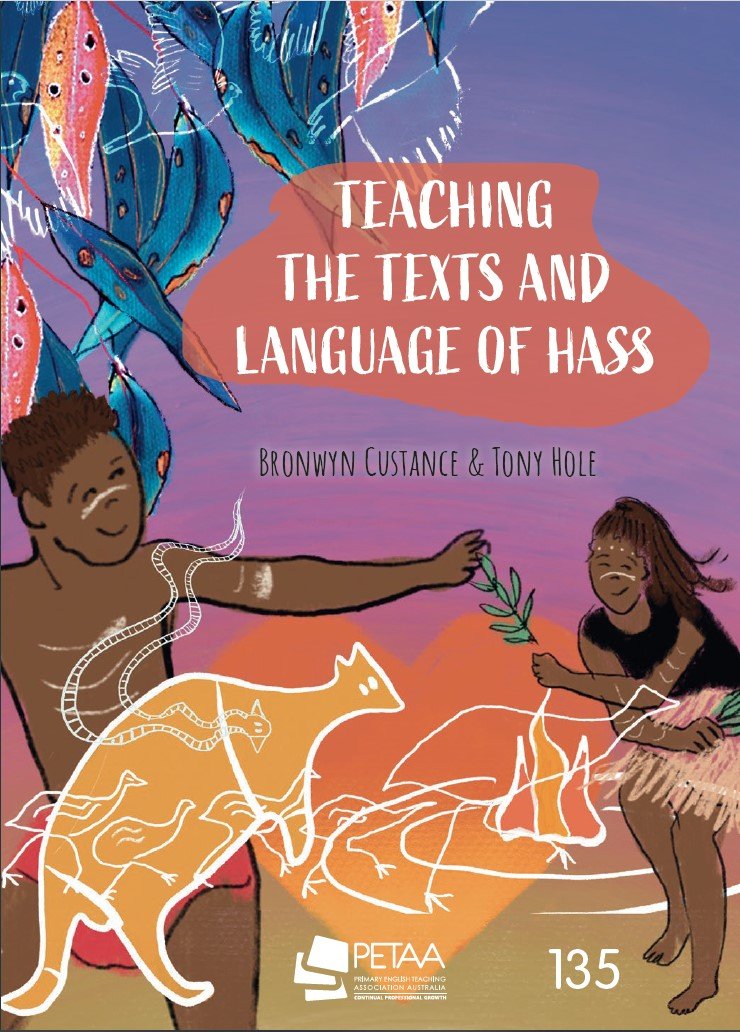
The first part of the book establishes the core genres and language demands in HASS. In the second part, in chapters devoted to each primary year group, the authors provide year appropriate model texts, discuss their key language features and provide guidance on how to explicitly teach the Discourse of HASS. This book gives teachers practical, clear and accessible classroom strategies for building a shared metalanguage for making and sharing meaning, from the introduction of new concepts through to assessment. Both books are available from the Primary English Teaching Association of Australia (PETAA) website in both hard copy and digital.
|
|
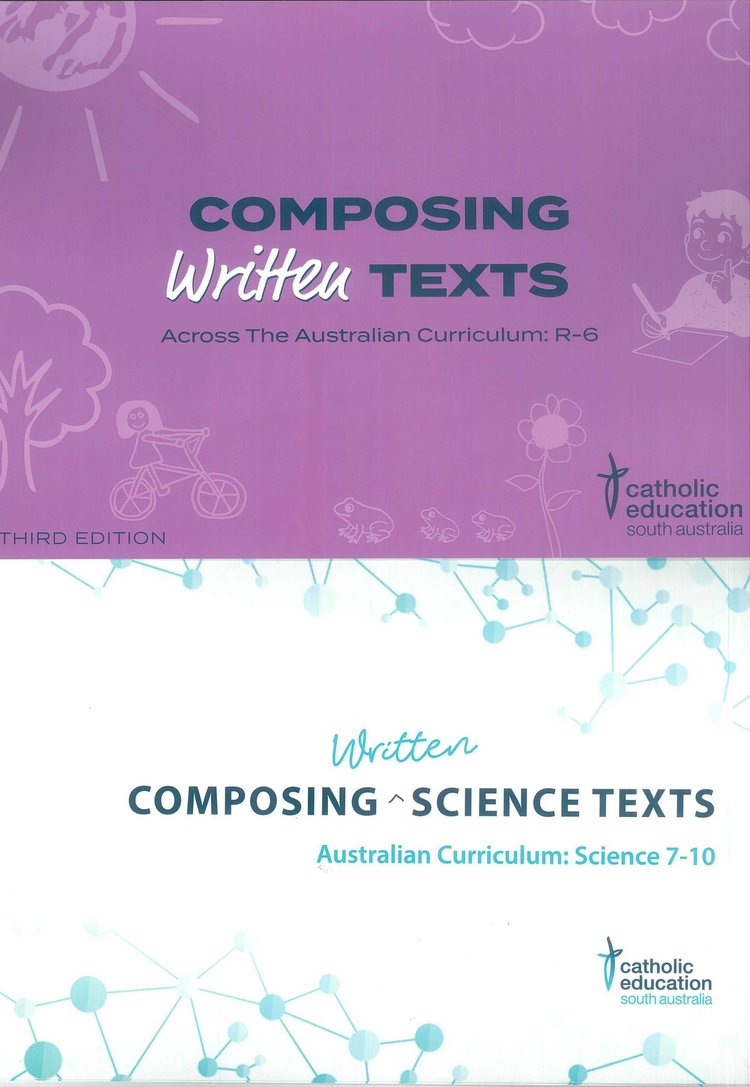
Composing Written Texts R-6 (Edition 3) and Composing Written Science Texts 7-10 are teaching resources that provide analysed and annotated model texts and scaffolding strategies for explicitly teaching text structures and language features within the Australian Curriculum.
|
|
|
|
|
|
|
Composing Written Texts R-6 (Edition 3) is the fully revised edition of a much-appreciated resource that was first published by CESA in 2013. Edition 3 features a significant revision of the model texts with five brand new model texts, ten modified texts, and new analyses to reflect the SA LEAP Levels. Also, the Scaffolding Learning strategies are now presented in a reformatted structure to more clearly articulate the revised Teaching Learning cycle that incorporates Supported reading/viewing. To purchase either of the resources, the order form is here.
|
|
If you have news relevant to the LLEN community, either personal achievements or publications, or news from your jurisdiction, please email to bronwyn.parkin@outlook.com.au or damon.thomas@uq.edu.au.
|
|
|
|